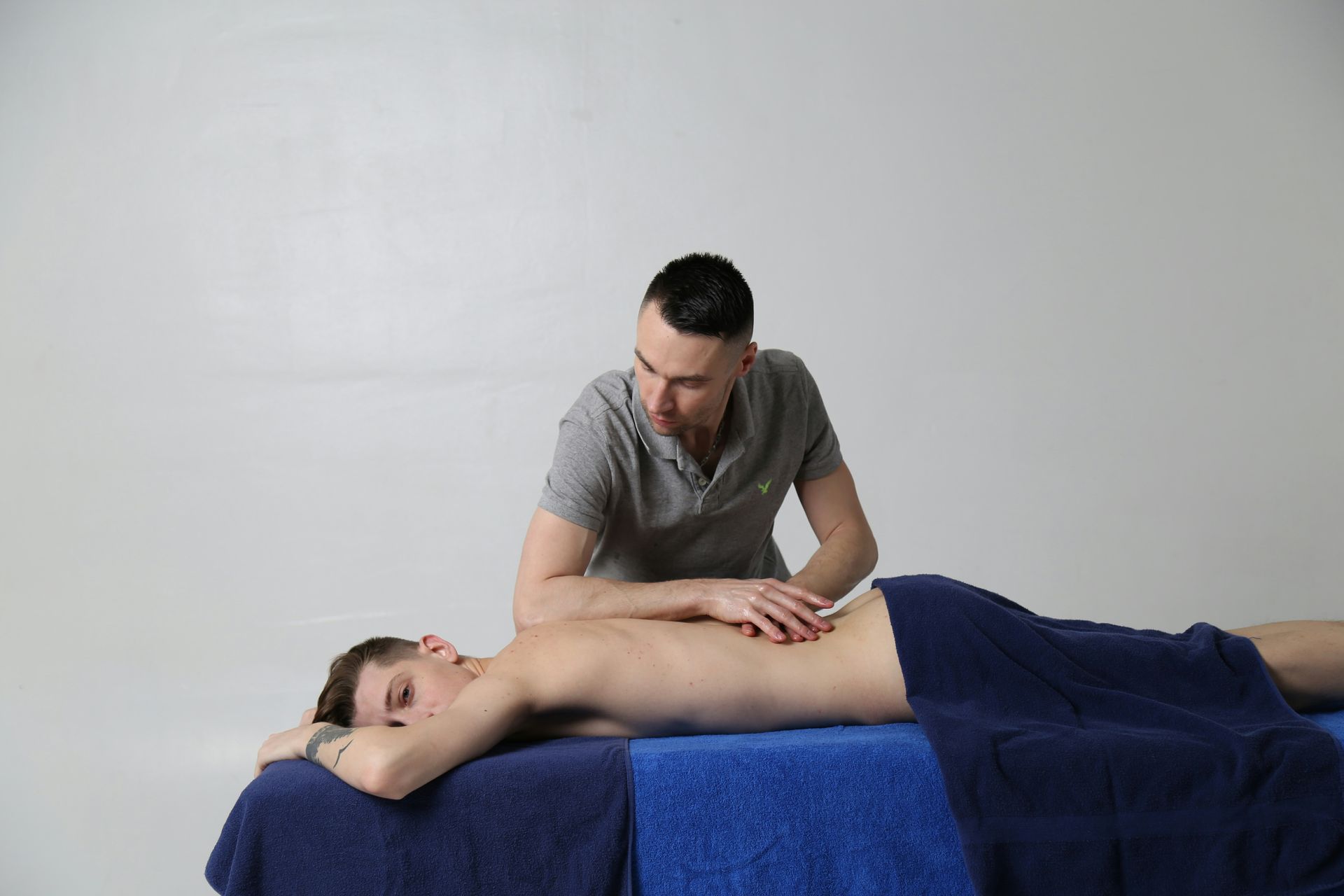

How Often Should You Get a Massage? Frequency for Pain, Stress and Recovery

Most healthy adults do well with one massage every two to four weeks. People with chronic pain often start with weekly or every-other-week sessions, then taper. Stress relief works best every two to three weeks, and recovery depends on your training load and goals.
So how often should you get a massage? It depends on your goal, your pain level, and how your body responds. Frequent sessions help most at the start of a pain problem, while spaced sessions maintain results. We adjust the schedule at every visit based on how you feel.
How Often Should You Get a Massage If You Have No Specific Problem?
Once every four weeks suits most healthy adults. People with physical jobs, long desk hours, or high stress often do better every two to three weeks. Muscle tension builds gradually, and a regular visit resets it before it turns into stiffness. Waiting more than six to eight weeks usually means starting over each time. We ask about sleep, activity, and work habits so your schedule fits your life.
How Frequently Should You Schedule Massages for Chronic Pain Relief?
For chronic pain, most people start with one session per week or every other week for four to six weeks, then move to every three to four weeks as symptoms ease. Research on exact schedules is limited, so we treat this as a starting point and adjust based on your response. Back and neck pain tend to respond best to consistent early sessions.
Our massage therapy services follow this approach. If pain hasn't improved after several sessions, that's a signal to reassess the plan or look for another cause.
How Often Should You Get a Deep Tissue Massage?
Every two to four weeks is a safe range for most people. Deep tissue work targets deeper muscle layers and connective tissue, and those tissues need time to recover.
Soreness for 24 to 48 hours afterward is common. Massage frequency for deep work should leave room for that recovery. Weekly sessions are usually reserved for short-term treatment of a specific problem. Daily deep tissue sessions are not recommended.
How Often Should You Get a Massage for Stress?
Every two to three weeks works well for ongoing stress, and weekly sessions can help during an especially demanding stretch.
Massage encourages relaxation and eases muscle tension, and the effect builds when sessions are consistent. Many people notice better sleep and less tightness in the neck, shoulders, and jaw.
If you want to see what else regular bodywork can do, read our post on 11 reasons to get a massage this month.
How Often Is Massage Therapy Recommended for Muscle Recovery?
During heavy training, a session every one to two weeks is a common pattern. After a major event or hard competition, a lighter session within one to three days can help with soreness and stiffness.
Recovery needs vary with training volume, sleep, and injury history, so plan sessions around your schedule, not the calendar.
If your provider suggests lymphatic work for swelling, see how to prepare for lymphatic massage before and after your visit.
What Is the Best Massage Frequency by Goal?
The best massage frequency depends on what you're treating. Use the ranges below as starting points, not fixed rules.
| Goal | Starting frequency | Maintenance | Key note |
|---|---|---|---|
| General wellness | Every 4 weeks | Every 4 to 6 weeks | Prevents tension buildup |
| Chronic back or neck pain | Weekly or every 2 weeks for 4 to 6 weeks | Every 3 to 4 weeks | Reassess if no change |
| High stress | Every 2 to 3 weeks | Every 4 weeks | Weekly during peak demand |
| Deep tissue | Every 2 to 4 weeks | As needed | Allow 48 hours to recover |
| Athletic recovery | Every 1 to 2 weeks in training | Around events | Lighter work after competition |
| Recent injury | 1 to 2 per week, short term | Taper with healing | Follow your provider's guidance |
What Are the Signs Your Massage Frequency Needs to Change?
Soreness that lasts more than two days, relief that fades quickly, or no progress after several sessions all mean your schedule needs adjusting. Watch for these signals:
- Soreness or bruising beyond 48 hours means sessions may be too intense or too close together.
- Relief that fades within a few days means the gap between visits may be too long.
- No improvement after four to six sessions means the cause may need another look.
- Feeling steady and pain-free for weeks means you can space visits further apart.
- New numbness, swelling, or sharp pain means you should stop and tell your provider.
Can Massage and Chiropractic Care Work Together?
Yes, and they often complement each other. Massage relaxes soft tissue, while chiropractic adjustments address joint motion. At Peak Performance Chiropractic & Wellness, we offer both and coordinate your care so the two support each other instead of overlapping.
For back pain in particular, we break down the options in our guide to medical massage for back pain and how it compares with chiropractic care.
Ready to Find Your Schedule?
At Peak Performance Chiropractic & Wellness, we'll help you set a massage schedule that matches your pain, stress level, and activity. Book an appointment and we'll build a plan with you.
Frequently Asked Questions
Is it okay to get a massage every week?
Yes, for most healthy people. Weekly sessions are common during pain treatment or heavy training. Once symptoms settle, moving to every two to four weeks keeps the benefit without overworking tissue. If you have a medical condition, check with your provider first.
Can you get a massage every day?
Daily massage is not typically recommended. Muscles need about 24 to 48 hours to recover from focused work, especially deep tissue. Daily sessions can lead to soreness, bruising, and irritation. A short-term exception may apply under a provider's direction for a specific condition.
How long should a massage session last?
Sixty minutes suits most people and allows full-body work. Thirty minutes works for one problem area, like the neck or lower back. Ninety minutes is useful for deep tissue work, larger areas, or athletes. Session length matters less than a consistent schedule.
What happens if you get massages too often?
Too many sessions can cause lingering soreness, bruising, fatigue, and tissue irritation, particularly with deep pressure. These effects usually fade once you space visits out. If soreness lasts more than 48 hours, tell your therapist so the pressure and schedule can change.
Is massage worth it for back pain?
For many people, yes. Clinical guidelines list massage among the non-drug options for low back pain, and many patients report less pain and better movement. Results vary, so massage works best as part of a broader plan with movement, posture changes, and professional guidance.
Who should avoid massage?
People with blood clots, fever, infection, open wounds, or unexplained swelling should wait and speak with a doctor first. Those who take blood thinners or have conditions like osteoporosis may need modified pressure. Always share your health history before your first session.