
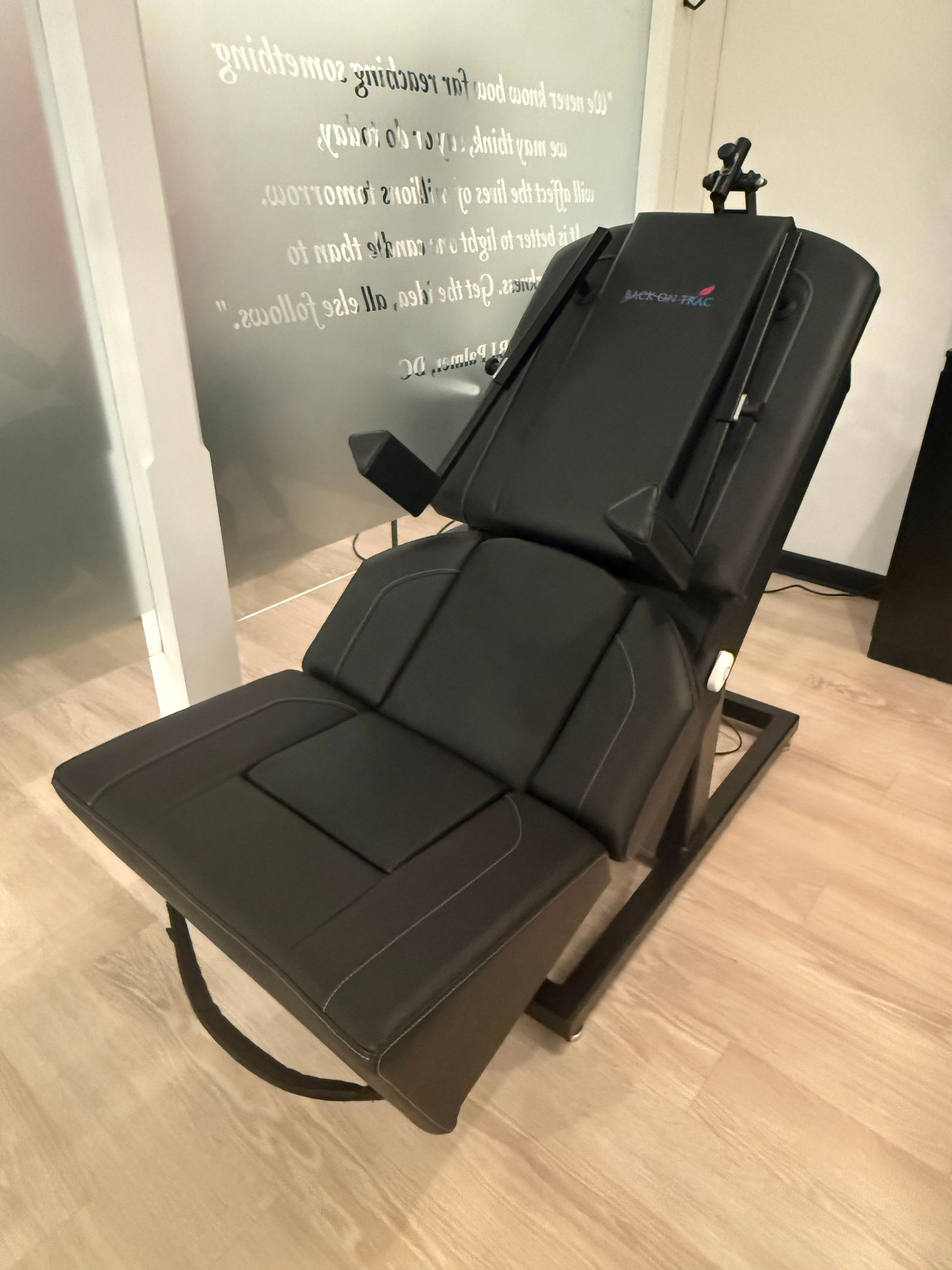
If you’ve ever called our office and asked, “Do you have availability for the chair?”—you’re not alone. At this point, the Back-on-Trac Decompression Chair has become something of a local legend. The name may sound intimidating (we promise, no medieval contraptions here), but the experience is quite the opposite. Comfortable, relaxing, and surprisingly gentle, this chair has earned its reputation as one of our most requested therapies.
So what’s all the hype about? Let’s take a closer look at why the Back-on-Trac has become a favorite for patients dealing with back and neck pain—and why it might be exactly what your spine has been asking for.
Why Spinal Compression Is Such a Big Deal
Modern life is not especially spine-friendly. Long hours sitting at desks, staring down at phones, commuting, lifting kids, exercising without enough recovery, and even stress can all add up. Over time, these daily demands compress the spine, especially the discs that sit between each vertebra.
These discs are meant to act like shock absorbers, but when they’re under constant pressure, they can lose hydration, bulge, or irritate nearby nerves. That’s when symptoms like stiffness, aching, sharp pain, numbness, or tingling start to show up—and they don’t always go away on their own.
This is where decompression therapy comes in.
Decompression Therapy: Creating Space to Heal
Decompression therapy is a non-surgical, non-invasive approach designed to gently reduce pressure on the spine. Instead of forcing movement or aggressively stretching tissues, decompression works by slowly and carefully creating space between the vertebrae.
The Back-on-Trac chair does exactly that. By applying a controlled, gradual stretch, it helps relieve pressure on spinal discs and nerves, encouraging improved circulation and nutrient flow to the area. When pressure is reduced, the body finally gets a chance to do what it does best—heal.
A helpful way to think about it: if your spine has been feeling “compressed” by life, decompression therapy gives it room to breathe again.
What It’s Like to Use the Back-on-Trac Chair
One of the reasons patients love the Back-on-Trac is how comfortable and approachable it feels. You’re seated upright in a supportive chair, secured with straps to ensure proper positioning. Once the session begins, the chair applies a gentle traction force tailored to your body and condition.
There’s no sudden pulling, twisting, or cracking. Most people describe the sensation as a deep, relieving stretch—often followed by a feeling of lightness or relaxation. Many patients are surprised by how calming the experience is, especially if they came in expecting something intense.
Sessions are typically short, making it easy to fit into your day, and there’s no downtime afterward. You can return to work, errands, or other treatments feeling looser and more comfortable.
Who Can Benefit from Back-on-Trac Decompression?
Decompression therapy is especially helpful for people whose pain is rooted in disc or nerve compression. Some common conditions we see improvement with include:
Herniated or Bulging Discs
When discs push outward and irritate nearby nerves, pain can radiate into the arms or legs. Decompression can help reduce that pressure, easing symptoms like sharp pain, tingling, or numbness.
Sciatica
Pain that travels from the lower back into the hip or leg is often caused by compression of the sciatic nerve. By relieving spinal pressure, decompression therapy may help calm irritated nerves and reduce radiating pain.
Degenerative Disc Changes
As discs naturally lose hydration with age, the spine can become stiff and painful. Decompression helps offload stressed discs and supports healthier movement patterns.
Spinal Stenosis
Narrowing of the spinal canal can compress nerves and cause discomfort or weakness. Gentle decompression may help create more space and reduce symptom flare-ups.
Chronic Back or Neck Tension
Even without a formal diagnosis, everyday aches from posture, overuse, or stress can respond well to decompression therapy.
More Than Pain Relief: The Bigger Benefits
While pain relief is often the first thing people notice, decompression therapy offers benefits that go beyond symptom management.
- It’s drug-free. No medications, injections, or reliance on painkillers.
- It’s non-invasive. No surgery, no recovery period, no risks associated with invasive procedures.
- It supports long-term spinal health. By improving disc hydration and reducing ongoing compression, decompression therapy can help prevent recurring issues.
- It pairs well with chiropractic and massage care. Many patients find that decompression enhances the results of adjustments and soft-tissue work by preparing the spine to move more freely.
Think of the Back-on-Trac as part of a bigger picture—one tool in a comprehensive approach to caring for your spine.
Why an Initial Chiropractic Visit Matters
Before hopping into the Back-on-Trac chair, we always start with an appointment with one of our chiropractors. This step is essential. Not every condition is appropriate for decompression, and we want to make sure it’s both safe and effective for you.
During your initial visit, your chiropractor will review your health history, assess your spine, and determine whether decompression therapy fits into your personalized care plan. Once you’re cleared, you can schedule Back-on-Trac sessions with confidence, knowing your care is tailored to your body’s needs.
We currently offer Back-on-Trac at both of our locations, making it easy to access this popular therapy.
Is the Back-on-Trac Right for You?
If you’ve been living with back or neck pain, feeling stiff when you wake up, or noticing that everyday activities are becoming less comfortable, decompression therapy may be worth exploring. The Back-on-Trac chair is gentle, effective, and designed to support healing—not just mask symptoms.
Sometimes, the most powerful changes come from giving your body the space it needs.
Ready to Try “The Chair”?
The Back-on-Trac Decompression Chair has helped countless patients find relief, improve mobility, and feel more at ease in their bodies. If you’re curious about whether it’s right for you, we’d love to help.
Schedule your initial chiropractic appointment today, and take the first step toward a spine that feels supported, decompressed, and ready for whatever life throws your way.
Bethany Wolcott
D’Youville Chiropractic ‘26