

Flexion & Distraction: A Gentle, Targeted Approach to Spine Care
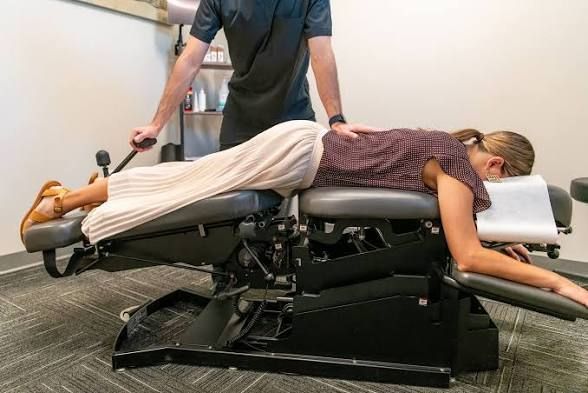
If you’ve ever heard someone say, “I don’t love the twisting and popping,” when talking about chiropractic care, flexion and distraction might be exactly what they’re looking for. This technique is one of the most comfortable, controlled, and patient-friendly tools chiropractors use—especially when dealing with sensitive or irritated spinal conditions.
Let’s break down what flexion and distraction is, how it works, and when it’s typically used for both the low back and the neck.
What Is Flexion & Distraction?
Flexion and distraction is a specialized chiropractic technique performed using a segmented treatment table that gently moves with the patient’s body. Instead of quick thrusts or high-velocity adjustments, this approach uses slow, rhythmic motions to stretch and mobilize the spine.
The name says it all:
- Flexion refers to bending forward.
- Distraction refers to a gentle pulling or decompression.
Together, these movements create space within the spine while improving motion in a controlled and comfortable way.
Patients often describe it as a “stretching” sensation rather than a traditional adjustment.
How Does It Work?
At its core, flexion and distraction works by reducing pressure in the spine and improving mobility.
Here’s what’s happening behind the scenes:
1. Decompression of spinal joints and discs
The gentle distraction (pulling) motion helps create space between the vertebrae. This can reduce pressure on intervertebral discs and nearby nerves—especially helpful if something is irritated or inflamed.
2. Improved disc mechanics
For patients dealing with disc bulges or herniations, flexion movements can help encourage better positioning of the disc material. Think of it as giving the disc a little room to “breathe” and settle.
3. Reduced nerve irritation
When spinal joints are compressed or inflamed, nerves can become irritated. By relieving pressure and improving motion, this technique can help calm things down.
4. Increased circulation and mobility
The repetitive, gentle motion promotes blood flow and helps loosen stiff joints and surrounding soft tissues.
One of the biggest advantages? It’s highly customizable. Chiropractors can control the speed, depth, and range of motion, making it appropriate for a wide range of patients—from those in acute pain to those simply looking to improve mobility.
Flexion & Distraction for the Low Back and SI Joints
This is where flexion and distraction is most commonly used—and where it really shines.
The lumbar spine (low back) and sacroiliac (SI) joints take on a lot of stress from daily activities like sitting, lifting, and bending. When something goes wrong here, it can lead to stiffness, sharp pain, or even symptoms that travel into the hips or legs.
Common conditions treated in this region include:
- Low back pain (acute or chronic)
- Disc bulges and herniations
- Sciatica
- Degenerative disc changes
- Facet joint irritation
- SI joint dysfunction
During treatment, the patient lies face down on the table and the lower half of the table gently pulls out. The chiropractor stabilizes part of the spine and gently flexes the lower half of the table up and down while stabilizing segments of the lumbar spins. The table assists in creating smooth, controlled movement. The chiropractor may also use a side-to-side or figure 8 motion to aid in opening up the disc spaces.
Why it works so well here:
- It reduces compression in the lumbar spine
- It allows targeted treatment of specific segments
- It avoids aggressive movements that may aggravate symptoms
For patients who are flared up or hesitant about more forceful techniques, this can be a game changer.
What About the SI Joints?
The SI joints—where the spine meets the pelvis—are small but mighty troublemakers. When they become stiff or irritated, they can cause pain in the low back, glutes, or even mimic sciatica.
Flexion and distraction can help by:
- Improving motion between the sacrum and pelvis
- Reducing stress across the joint
- Addressing surrounding muscle tension
Because the movements are gentle and controlled, it’s particularly useful for patients with sensitive or inflamed SI joints.
Flexion & Distraction for the Cervical Spine
While many people associate this technique with the low back, it can also be adapted for the cervical spine.
The neck is a more delicate area, so treatments here are even more precise and controlled. Instead of large movements, the chiropractor uses small, targeted motions to create decompression and improve mobility.
Common conditions treated in the neck include:
- Neck pain and stiffness
- Cervical disc issues
- Radiating pain into the shoulders or arms
- Headaches related to neck tension
- Postural strain from desk work or device use
How it helps:
- Gently relieves pressure on cervical discs
- Reduces irritation of nerves traveling into the arms
- Improves range of motion without aggressive force
For patients who feel uneasy about traditional neck adjustments, this approach can feel much more approachable and comfortable.
What Does It Feel Like?
One of the most common questions patients ask is, “Is it going to hurt?”
Short answer: typically, no.
Most patients find flexion and distraction to be:
- Relaxing
- Gentle
- Rhythmic
- Stretch-like
In fact, some people are surprised at how subtle it feels—especially compared to what they expect from chiropractic care.
That said, if you’re already dealing with a painful condition, you may feel mild discomfort at first. But the goal is always to work within your tolerance and gradually improve how things feel over time.
Who Is a Good Candidate?
Flexion and distraction is a great option for a wide range of patients, including:
- People with acute low back pain
- Patients with disc-related issues
- Those with nerve-related symptoms (like sciatica)
- Individuals who prefer a gentler approach
- Patients who are sensitive to traditional adjustments
It’s also commonly used for patients who are early in care and may not yet tolerate more direct techniques.
When Is It Not the Best Fit?
While this technique is versatile, it’s not always the first choice in every situation. Certain conditions may require different approaches or modifications.
That’s why a thorough evaluation is key—so your provider can determine the safest and most effective treatment plan for you.
The Bottom Line
Flexion and distraction is one of the most patient-friendly techniques in chiropractic care. It’s gentle, controlled, and highly effective for reducing pressure in the spine while improving mobility.
Whether it’s being used for the low back, SI joints, or even the neck, the goal is the same:
restore motion, reduce irritation, and help you move more comfortably.
If you’ve been dealing with back or neck discomfort—or if you’ve been hesitant to try chiropractic care because you’re unsure about traditional adjustments—this technique might be worth exploring.
As always, if you have questions about whether flexion and distraction is right for you, bring it up at your next visit. Your provider can walk you through what to expect and tailor care to your comfort level and goals.
Bethany Wolcott
D’Youville Chiropractic ‘26